
Blog
Dental hygiene tips for healthy teeth & gums
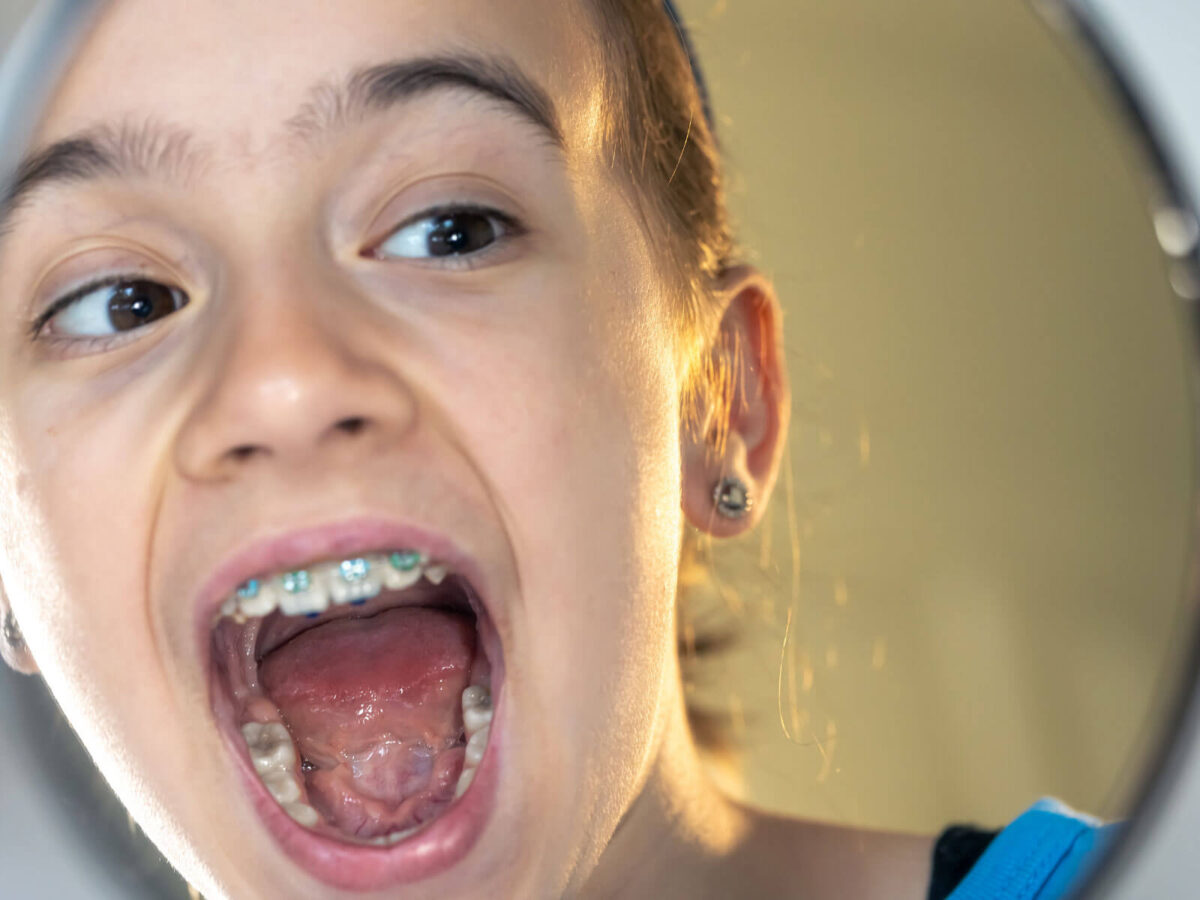
Do Braces Affect Your Speech? Why It Happens and How Long It Lasts
Most people find out from a voicemail. You leave one the day after getting braces, play it back, and hear a slight whistle on every S that wasn’t there the week before. Then you spend the rest of the afternoon listening to yourself say words with an S in them.
The whistle has a cause, and it isn’t complicated. Your tongue has spent your entire life hitting the same landing spots on the back of your teeth, thousands of times a day, without you ever once thinking about it. Something has just been glued onto every one of those spots.
Any braces speech impediment temporary enough to fix itself usually clears in a couple of weeks. That’s the standard adjustment window. It does nothing for how you feel about the meeting you have on Thursday.
TL;DR
A braces speech impediment temporary enough to fix itself is the usual outcome. Brackets add bulk exactly where your tongue lands to make certain sounds, and new muscle memory has to be built.
Sibilants take the worst of it. Research consistently finds the S sound the most affected, and it’s also the slowest to come back.
Most people are fine within a few weeks. A meaningful minority take two months or longer, which nobody warns you about at the fitting.
Aligners cause a milder version tied to each new tray. Lingual braces, bonded behind the teeth, disrupt speech more than any other appliance because they sit directly on the landing spot.
Reading out loud is what most orthodontists suggest. It forces the repetition that a normal day of talking doesn’t.
Why Does Speech Change When Braces Go On
Speech depends on your tongue making precise contact with your teeth and palate. Brackets sit at those exact contact points, and they change the geometry by a millimeter or two. That’s enough.
Airflow is the other half. Sibilants need a narrow channel for air to pass over the tongue, and a wire running across the front teeth interrupts it.
Nothing is being damaged here. Your brain builds new motor patterns around the hardware the same way it built the originals, which is to say, slowly and without you noticing.
Which Sounds Are Affected Most
Sibilants go first, and they go hardest. S and Z, then SH and CH. All four sounds need your tongue to hold a narrow channel and push air through fast. A bracket sitting right in that space turns a clean sound into a whistle. If your name has an S in it, you’ll hear it straight away.
Dental consonants follow. T and D, where the tongue taps behind the front teeth. TH, where it slips between them. F and V, where the lip meets the upper teeth and now meets a wire instead. None of these break outright. They just land slightly off target for a few weeks.
The systematic review by Chen, Wan and You picked out S, T, D and the vowel /i/ as the sounds most consistently disrupted across appliance types. S was the one that hung around longest, in some cases past three months, which is why almost every search about braces and lisp is a search about one consonant.
Is a Braces Speech Impediment Temporary for Everyone
For nearly everyone, yes. Most of the improvement arrives in the first few days, and the rest tends to follow within a couple of weeks.
The research is less tidy than that, though. One study of fixed labial appliances found 44% of patients showed no measurable change at all, 39% adapted within two months, and 17% still had sound errors at the two-month mark. Those figures resolved eventually; they just took longer than the internet promises.
Appliance type moves the timeline. A meta-analysis found lingual braces produced more speech impediments than labial ones, which follows from where they sit. Bonded behind the teeth, they occupy the exact space the tongue needs.
Worried About How You’ll Sound at Work?
Ask an orthodontist which appliance suits your speaking demands best.
How to Talk With Braces in the First Two Weeks
Read out loud, ten minutes a day. A news article, a recipe, whatever’s beside your bed. Ordinary conversation doesn’t give your tongue enough repetition to recalibrate on, and this does.
Slow down deliberately. Rushing makes the lisp worse. Your tongue is still working out where the new landing spots are, and at normal speed it overshoots them. Half a beat slower than feels natural is usually enough.
Drill the hard consonants on their own. Sister, seven, scissors, sixty. Sixty seconds of that beats an hour of normal talking, and it sounds ridiculous, which is the general theme of how to talk with braces.
Use wax on the front brackets. Less friction against the lip means less unconscious compensating, and it’s the compensating that bends the sound out of shape.
Stop apologizing for it. Most listeners never register the difference. The person hearing it loudest is you.
Does an Invisalign Speech Impediment Work Differently
Aligners work by covering each tooth in thin plastic, so nothing is bolted on. What changes is the thickness of every tooth at once. The result is a softer lisp with a whistle behind it, and it’s loudest in the first day or two of a new tray.
That pattern repeats. Every tray change restarts a small version of the same adjustment, though each one is shorter than the last as your tongue learns the general shape of what it’s dealing with.
Comparative research bears this out. One study comparing 191 aligner patients against fixed and lingual appliances found speech difficulty varied by appliance type, with the fixed groups reporting more of it.
Pulling the trays out for a presentation is a reasonable thing to do in week one. Do it every time you have to speak, and you’ll still be adapting in month two.
Should You See a Speech Therapist
Six to eight weeks with no improvement is the usual threshold. You should be able to hear progress well before then, even if the S still isn’t quite right.
A lisp that predates the braces is a different problem. Orthodontics can remove the physical cause, closing an open bite or shutting a gap, and leave the habit sitting exactly where it was. The tongue has been compensating for years and doesn’t stop just because the reason went away.
That’s the case where a speech therapist earns their fee. Running therapy alongside treatment means the retraining happens while the teeth are moving, and you finish both at roughly the same time.
FAQ
Will I lisp again after my braces come off?
For only a few days. Your mouth has to unlearn the brackets the same way it learned them.
Do singers have a harder time?
Anyone whose voice is part of their job tends to notice more, because they’re listening for things most people don’t. Wind players get it worst.
Are ceramic braces easier to speak with than metal?
Not by much. What matters is how much the bracket sticks out. Not what it’s made of.
Can I do anything before getting braces to prepare?
No, and there’s nothing to practice against until the hardware is in. The work starts on day one.
Conclusion
A braces speech impediment temporary enough to sort itself out is what nearly everyone gets. Two weeks for most people. A couple of months for a minority. The sounds that give trouble are the same ones every time, which at least makes them easy to practice.
None of what helps is interesting. Read out loud, slow down, and get through the first two weeks without avoiding people. That’s the whole intervention.
If you talk for a living, raise it at the consultation. Appliance choice can be planned around a job that depends on your voice, and lingual braces in particular are worth knowing about before rather than after.
Concerned About Speech During Treatment?
Talk it through with an orthodontist before you choose an appliance.

